From signed to shipped.
Gravel reads the traffic an engagement already produces and turns it into four systems both sides work from. Nothing gets retyped from one tool into another.
- Client email
- Slack & Teams channels
- Meeting notes & transcripts
- Docs
- Past tickets
- Tickets & tasks
- Every request captured, assigned, and tracked.
- Timeline
- What ships when, and what slipped.
- Knowledge base
- Decisions and context, written as they happen.
- Goals
- The numbers the deal was sold on.
All four shared with the client by default — same board, same dates, same numbers. Agents keep them current; your team approves what the client sees. Nobody writes the weekly status email again.
Phase ILearn
A deal signs. Gravel connects to client email, shared Slack and Teams channels, and meeting transcripts — and learns the goals, the stakeholders, and where the work stands.
engagement mapPhase IIPilot
Agents work the engagement beside your team and the client's. Every request gets captured; every status stays current.
every ask on the boardExhibit A · The delivery board. Your team sees agents and people working tickets side by side, decisions waiting on you at the top. 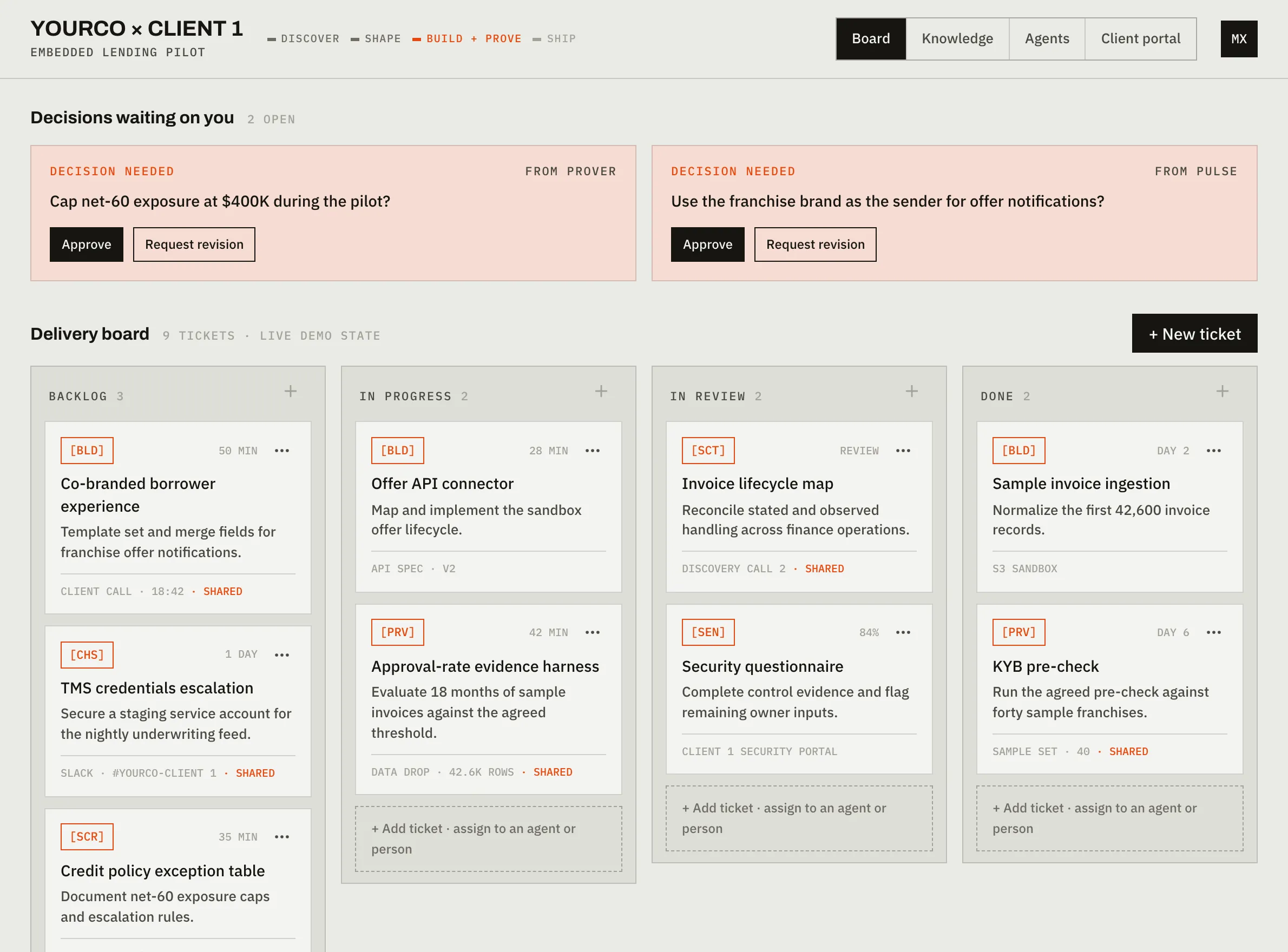
Phase IIIProve
The goals you sold become a shared scoreboard, tracked by agents and signed off by your team.
signed-off numbersExhibit B · The client portal. Your client sees milestones, metrics, and one open ask. Same state, two views — no task soup. 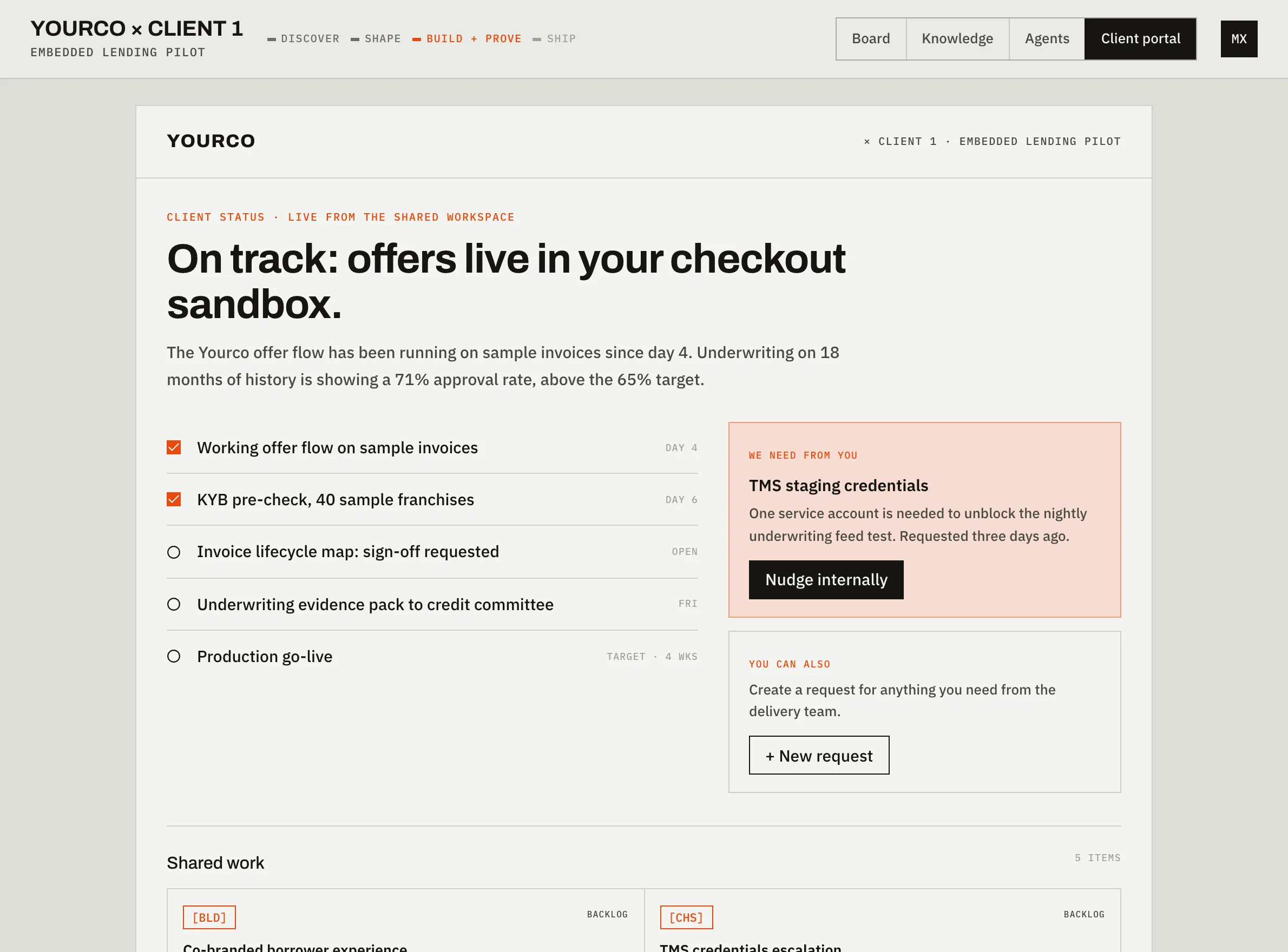
Phase IVPave
What the field learned doesn't stay in the field. Requirements and lessons distill into product requests, filed to your backlog and internal knowledge base.
next one starts warm